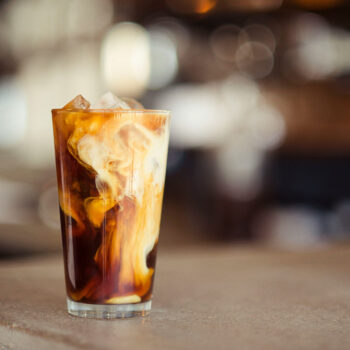


It’s a familiar scene in any Central Texas city come June. Pavement shimmering, air sitting heavy, sun unrelenting. You push through the door of a coffee shop, the AC hits, and for a second you just stand there. You’re waiting on an iced cold brew when the person ahead of you orders a steaming hot latte.
On the surface it makes no sense. Why reach for something hot when it’s already 105 outside? The answer isn’t just habit, it lands at the intersection of physiology, indoor climate culture, and the kind of daily ritual that simply doesn’t negotiate with the weather report.
Contents
The Science: How Your Body Actually Cools Itself
The physiology here is called thermoregulation. Drink something hot, and thermoreceptors in your mouth and throat send a signal to your brain: heat detected. The brain responds by triggering sweat. As that sweat evaporates off your skin, it carries heat with it, lowering your core body temperature in the process.

The effect is most pronounced in dry heat, where sweat evaporates quickly. That describes most of Texas from May through October. A 2012 University of Ottawa study found that hot drinks can produce a net cooling effect under those conditions, the sweating response they trigger outpaces the heat the drink adds. So the hot coffee prompts your body to overcorrect, and you end up cooler than you would have been with the iced version. Counterintuitive, but the data holds.
The Indoor Arctic: How Texas AC Culture Flips the Equation
Walk from the Texas heat into any office building, campus library, or retail store and you’ll hit a wall of cold air. Texas AC runs aggressive, indoor temperatures routinely land at 68-70°F, sometimes lower, even when it’s 105 outside. After your body has been running hot all morning, that shift can feel genuinely cold within minutes.
At that point, a hot coffee stops being about the outdoor temperature at all. It becomes a heat source, something to wrap your hands around at a desk directly under an AC vent, or during a three-hour study session in a library set to a temperature better suited to storing produce. For that use case, hot makes more sense than iced, and the weather outside becomes irrelevant.
Ritual and Taste: The Part Physiology Can’t Explain
Then there’s the reason that has nothing to do with thermodynamics: it’s what they drink. The morning coffee is a ritual, and rituals resist substitution. Hot coffee delivers something cold brew doesn’t, volatile aromatic compounds only released at brew temperatures above 190°F, the warmth conducting through ceramic before the first sip, the way the smell front-loads the experience. Temperature isn’t incidental to the flavor. It is part of the flavor. You can’t just swap it out and call it the same drink.

Hot water and cold water pull different things out of coffee. Brewing at 195-205°F, the range most specialty roasters recommend, extracts volatile aromatics, bright acids, and the bitters that define a roast’s character. Cold brew’s 12-to-24-hour room-temperature steep is gentler: lower acid, smoother body, but also a chemically different drink. Roasters who build complexity into a Kenyan AA or an Ethiopian natural expect those beans brewed hot, where the fast extraction lets those aromatics actually develop. There’s also a practical argument cold brew loses by the end of the cup: dilution. A hot latte tastes the same from the first sip to the last. Add ice and you’re racing the melt, by the bottom, you’re drinking something different than what you ordered.
FAQs
Does this cooling effect from hot drinks work in high humidity?
Not as well. The mechanism depends entirely on sweat evaporating from your skin, that’s where the actual heat transfer happens. High humidity means the air is already close to saturated, so sweat evaporates slowly or not at all. You end up hot and wet rather than cooled. In Texas, this distinction is significant: a 98°F day in May at 30% humidity is a completely different physical environment than the same temperature in late August along the Gulf Coast, where humidity can sit above 80%. The cooling effect is real in one scenario and nearly useless in the other.
Is there a caffeine difference between hot coffee and cold brew?
Usually yes, and often by a wide margin. Cold brew is made with a high coffee-to-water ratio, typically a 1:4 to 1:8 concentrate, steeped for 12 to 24 hours, which extracts more caffeine per ounce than standard drip coffee’s roughly 1:16 ratio. A 12 oz serving of cold brew typically contains 150 to 200 mg of caffeine; the same size drip coffee runs about 95 to 120 mg. Espresso-based hot drinks shift the math again: a single shot is roughly 63 mg, so a double-shot latte lands around 126 mg. Temperature doesn’t affect caffeine content, brew method and coffee-to-water ratio do.
Will drinking hot coffee in the heat dehydrate me?
Probably not, in moderate amounts. Coffee is a mild diuretic, but a 2014 study published in PLOS ONE found that habitual coffee drinkers consuming three to six cups daily showed similar hydration markers to those drinking equivalent amounts of water, the fluid in the coffee largely offsets the diuretic effect. That said, Texas heat means you’re sweating more than usual, and coffee isn’t water. Drink both.
So, is it better to drink hot or iced coffee in the summer?

Depends on the situation. If you’re heading outside into dry heat and have time for the sweat response to kick in, a hot coffee can genuinely leave you feeling cooler, the physiology supports it. If you’re already overheated and want immediate relief, cold wins on practicality. Most people aren’t running this calculation at the drive-through window. Drink what you like.
Does drinking hot coffee really cool you down more than iced coffee?
Yes, but conditionally. Hot liquids raise your core temperature slightly, triggering your body’s cooling response, you sweat more, and as that sweat evaporates it pulls heat away from your skin. The catch is humidity. Evaporation requires the surrounding air to have capacity for more moisture. In dry conditions, or with a breeze moving air across your skin, the effect is real. In high humidity, sweat evaporates slowly and the mechanism largely stalls. At that point, the iced drink wins on simple comfort.
Why do I feel more focused after a hot coffee compared to a sugary iced drink?
The difference is blood sugar, not just caffeine. Sugary specialty drinks spike glucose fast and drop it just as fast, that’s the crash. Hot black coffee or a latte with minimal sweetener delivers caffeine without that blood sugar swing, so the alertness lasts longer. The warmth helps too: holding something warm tends to reduce the wired, restless edge that can come with a big caffeine hit, which is why many people find it easier to settle into focused work with a hot cup than an iced one.
Is hot coffee safer for catering than iced coffee in the summer?
From a logistics standpoint, yes. Ice melts, dilutes the drink, and needs constant management, especially over a multi-hour event in Texas heat. Hot coffee in a quality insulated tote skips all of that. Our totes hold the coffee at serving temperature for several hours, so guests at the end of the line get the same quality cup as guests who arrived first.
Can I get the same caffeine kick from hot coffee as they do from cold brew?

Cold brew is more concentrated per ounce, but a double-shot latte or a strong drip coffee still delivers a real boost. The bigger consideration for students is often stomach tolerance: cold brew’s higher caffeine concentration can cause jitters on an empty stomach, and despite a reputation for being gentler, some people find it harder to handle before eating. Hot coffee tends to be more forgiving in that situation. For most students, the functional difference in energy is smaller than the “cold brew” label implies.
What is the best hot drink for someone who usually only likes iced coffee?
Start with a Flat White or a traditional Cappuccino. Both are built around a double espresso shot with a smaller pour of steamed milk, a Flat White typically runs 5-6oz, a Cappuccino around 6oz. The smaller volume means you’re not committing to a large hot drink right away, and the higher espresso-to-milk ratio delivers the bold flavor that iced coffee drinkers tend to want without diluting it. It’s a closer bridge to cold brew than a 16oz latte would be.
Finding Your Balance in the Texas Summer
Choosing hot coffee on a 95°F day is not about ignoring the heat, it’s about knowing your own body. Thermoregulation, time spent in air conditioning, personal caffeine tolerance, and the simple comfort of a warm ritual all matter more than the temperature on the other side of the glass. The physiological case for hot coffee is real: your body sweats in response to it, which actually cools you down. The case for cold brew is real too. What works for you, whether that’s triggering your body’s cooling response or just thawing out from a frigid office, is the only metric worth paying attention to.
Whether you’re leaning into the heat with a cold brew or warming back up against the office AC with a hot latte, Mochas & Javas has a cup worth reaching for.